KTG Property Solutions, Inc.
Timothy Cooprider
📞 561-756-2145
📍 231 Bradshaw Blvd, Perry, FL 32348
Timothy Cooprider
📞 561-756-2145
📍 231 Bradshaw Blvd, Perry, FL 32348
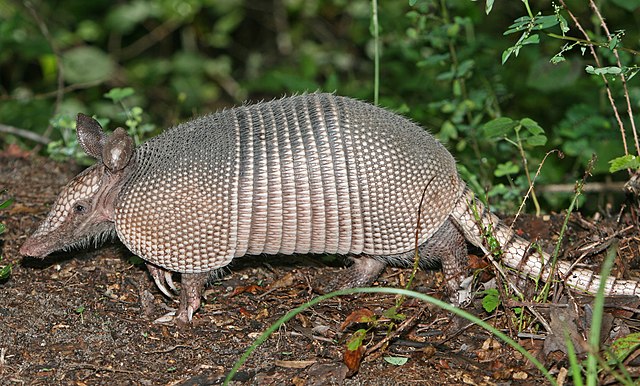
The nine-banded armadillo is a distinctive mammal characterized by its armor-like shell composed of bony plates covered with tough, leathery skin. These unique creatures typically weigh between 8 to 17 pounds and measure 24 to 32 inches in total length, including their long, tapered tail. Armadillos are NOT native to Florida but are considered an invasive species that expanded their range into the state during the late 19th and early 20th centuries from Texas and Mexico. They are primarily insectivores with a keen sense of smell, using their strong claws and long snout to dig for grubs, beetles, ants, earthworms, and other invertebrates. Armadillos are generally solitary, nocturnal animals, though they may occasionally be active during daylight hours in cooler weather. Despite their armored appearance suggesting they might roll into a ball, the nine-banded armadillo cannot fully curl up like some other armadillo species. They are surprisingly good swimmers and can hold their breath for up to six minutes, allowing them to walk along the bottom of streams and ponds or inflate their intestines to float across water.
Armadillos prefer habitats with loose, sandy, or loamy soil that makes digging easier for their constant search for food and burrow construction. In their natural range outside of Florida, they inhabit a variety of environments including pine forests, hardwood bottomlands, brushy areas, and grasslands. They create extensive burrow systems that can be 15 feet long and several feet deep, often with multiple entrances for escape routes. These burrows provide protection from predators and extreme temperatures while serving as nesting sites for raising young. Armadillos need areas with abundant insect populations to sustain their diet and prefer locations with leaf litter and decomposing vegetation where invertebrates thrive. Since their expansion into Florida as an invasive species, they have successfully adapted to various habitats including scrublands, forest edges, agricultural areas, and increasingly, suburban environments. The warm Florida climate, combined with irrigation and landscaping practices that create ideal conditions for their insect prey, has allowed these non-native animals to thrive far beyond their historical range. Unlike native Florida species that evolved with the local ecosystem, armadillos disrupt established ecological balances and compete with native insectivores.
Armadillos possess several remarkable features that distinguish them from other North American mammals and contribute to their success as an invasive species. They have very poor eyesight but compensate with an exceptional sense of smell that can detect insects up to six inches underground. When startled, armadillos exhibit a unique vertical jumping reflex, often leaping three to four feet straight up in the air—a behavior that unfortunately often results in vehicle collisions as they jump into the undercarriage of passing cars. They are the only mammals that can contract and carry leprosy (Hansen's disease), though transmission to humans is extremely rare and requires prolonged contact. Armadillos always give birth to identical quadruplets from a single fertilized egg, making them the only mammal with this consistent reproductive pattern. This unusual reproductive trait contributes to their rapid population expansion. Their body temperature is relatively low at around 90°F, which limits their tolerance for cold weather and explains their preference for warmer climates like Florida. The armor plates that give armadillos their name are made of bone covered with keratin and are connected by flexible bands that allow limited mobility. As an invasive species, their prolific digging behavior causes far more damage to Florida's landscape than any ecological benefit they might provide.
As an invasive species in Florida, armadillos have thrived in the changing landscape created by residential development throughout Taylor County and surrounding areas. The expansion of subdivisions has paradoxically benefited these non-native animals by providing well-irrigated lawns and landscaped areas that harbor abundant insect populations year-round. Modern residential properties with maintained grass, mulched flower beds, and garden areas create prime foraging grounds for these prolific diggers. However, their presence causes significant and costly damage to properties, lawns, agricultural lands, and crops. Armadillos create numerous burrows that can undermine building foundations, driveways, sidewalks, and septic systems, potentially causing structural damage costing thousands of dollars in repairs. Their relentless digging for food leaves lawns severely damaged and pockmarked with cone-shaped holes and large disturbed areas that destroy turf and landscaping. Golf courses, parks, athletic fields, and agricultural fields suffer extensive damage from their foraging activities, with some properties experiencing damage that requires complete lawn renovation. Unlike native species that evolved as part of Florida's ecosystem, armadillos provide no ecological benefit to the state and actually harm the environment by disrupting ground-nesting birds, competing with native insectivores like the endangered gopher tortoise, and destabilizing soil structures. Their expansion into developed areas has created an increasing need for management and removal, particularly when their burrowing threatens structures, utilities, or landscaping. The damage they cause to property, crops, and native habitats often necessitates removal to protect land value, agricultural interests, and Florida's native ecosystems. In many cases, controlling armadillo populations is essential for preserving both property integrity and the state's natural environmental balance.
Contact KTG Property Solutions for professional assessment and removal services.
Request Service